
Children’s Vision
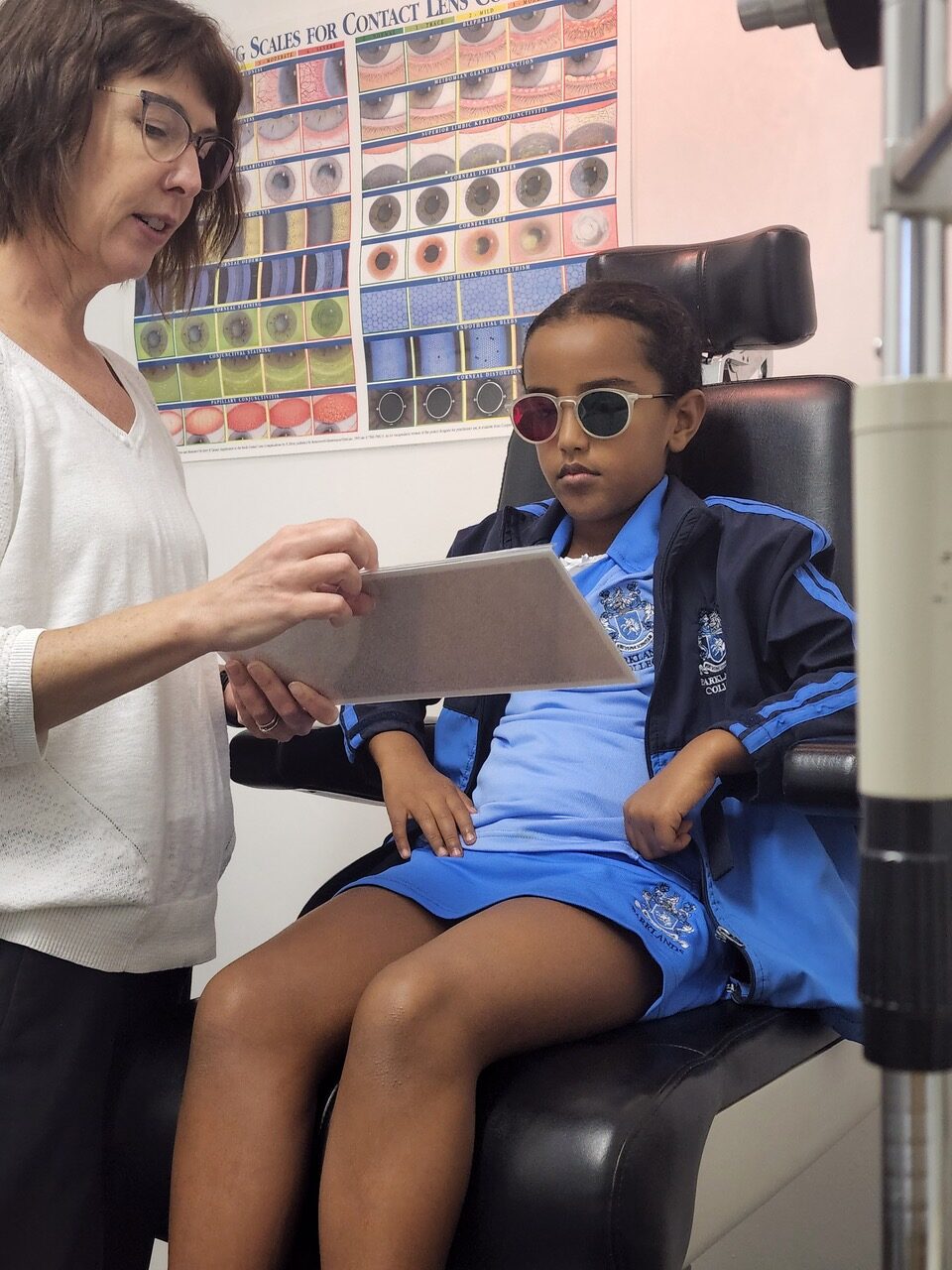
Karen is passionate about helping children and providing the best visual skills for their learning environment. Children who struggle at school often have underlying visual problems. These children should undergo a full functional examination, which includes testing of eye movements, binocular vision and other areas. It is strongly recommended that children undergo an evaluation prior to starting school.
Eye examinations for children are not only limited to school ages but can be done from any age. Ideally a child’s first eye examination should be at 3 years of age (provided a paediatrician has done initial assessments in the early developmental years). Earlier optometric visits are needed if visual problems are suspected or known to be in the family. It is best to see toddlers and children in the morning when they are alert.
How Do You Know If Your Child Has Visual Problems?
Apart from blurred vision, eye rubbing or an eye turning in our out, other symptoms could include:
- headaches
- eyestrain
- burning or tearing eyes
- double vision
- difficulty focusing at near or far
- poor reading ability
- slow in copying from the board in the classroom
- poor concentration and restlessness
Research shows that about 20% of school-aged children have undetected vision problems. This value increases when a child has been diagnosed with ADD, ADHD, or other learning difficulties.If you suspect that you or your child may be struggling because of an undiagnosed vision problem, contact us for further information and we’ll gladly schedule an appointment for you.

Vision and Reading
Reading requires the use of language, decoding, phonetic, and visual skills in order to recognise words and create meaning from the written text. Up to 20% of school aged children struggle to read and only a portion of these children have a learning disability (LD) or dyslexia (brain’s inability to translate images received from the eyes/ears into understandable language). Children with reading problems often have visually related deficits. Eye teaming disorders, focusing problems and visual perceptual skills deficits (not language-based reading dysfunctions) can be the cause. The symptoms, however, are similar to a LD and dyslexia and only a complete visual assessment can determine if vision is affecting a child’s reading ability.
Symptoms during reading can include eyestrain, burning or tearing eyes, fatigue, headaches, floating or swimming print, loss of place whilst reading and frustration.