
In today’s world, screens are everywhere—from online classrooms to video games, cartoons, and tablets at the dinner table. While technology has its perks, many parents are left wondering: How much screen time is too much for my child? And more importantly—what is it doing to their eyes?
Let’s explore what’s recommended, what to watch for, and how to strike a healthy balance.
How Much Screen Time Is “Too Much”?
According to the American Academy of Pediatrics (AAP):
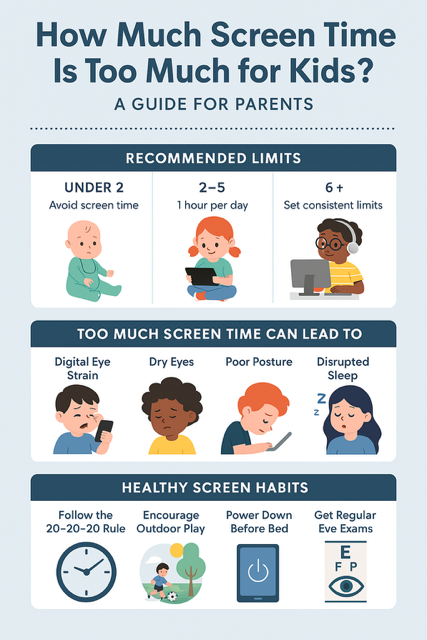
- Children under 2: Avoid screen time (except for video chatting with family).
- Ages 2 to 5: Limit to 1 hour per day of high-quality programming, like educational games or shows.
- Ages 6 and up: As many children need to use screens for schoolwork, a general rule for gaming should be no more than 60 minutes on school days and 2 hours on non-school days (as mentioned in an article from the Child Mind Institute). Set consistent limits to ensure screen time doesn’t interfere with sleep, physical activity, or face-to-face play.
- For teenagers: The recommended limit for sedentary, recreational screen time is also no more than 2 hours per day. This includes time spent on devices for leisure activities like gaming, social media, or watching videos, but not screen time related to schoolwork or other necessary tasks.
Impact of excessive screen time
Excessive screen time can have negative impacts on children’s physical and mental health, including potential links to obesity, depression, behavioural issues, and social skills development challenges.
But beyond general health, screen time also affects something many parents don’t think about right away: your child’s eyes.
Screen Time & Eye Health: What Parents Should Know
When kids spend a lot of time on screens, especially up close (like tablets or phones), they’re at higher risk of:
- Digital Eye Strain – Also known as “computer vision syndrome,” it can cause blurry vision, tired eyes, and headaches.
- Dry Eyes – Kids blink less when staring at screens, leading to dryness and discomfort.
- Poor Posture – Long periods of screen time can cause neck and shoulder tension that affects overall well-being.
- Disrupted Sleep – Blue light from screens can interfere with melatonin levels, making it harder to fall asleep.
- Developing Shortsightedness – more screen time usually means less time spent outdoors. Outdoor time is crucial in developing your child’s vision.
How to Spot Screen Overload in Kids
Keep an eye out for these signs that your child might be getting too much screen time:
- Complains of headaches or tired eyes
- Rubs their eyes often
- Squints or sits too close to the screen
- Has trouble falling asleep
- Becomes irritable or restless when screens are turned off
Tips to Create Healthy Screen Habits
You don’t have to ditch screens completely—just use them wisely. Here’s how:
- Follow the 20-20-20 Rule
- Every 20 minutes, have your child look at something 20 feet away for 20 seconds.
- Encourage Outdoor Play
- Time outside gives the eyes a break and reduces the risk of developing nearsightedness (myopia).
- Use Screen Time as a Privilege, Not a Habit
- Set screen time boundaries and offer alternatives like books, puzzles, or art time.
- Power Down Before Bed
- Turn off screens at least 1 hour before bedtime to help their brain and eyes relax.
- Get Regular Eye Exams
An annual eye exam can help catch vision issues early—especially if your child spends a lot of time on screens for school or fun.
👓 We’re Here to Support Healthy Vision for Kids
At Glanz Optometrist, we know how much kids rely on screens—but we also know how important it is to protect their eyes during their growing years. If you’re concerned about your child’s vision or screen time habits, let’s chat.
See the world clearly—inside and out. Until next time!
Karen